The Two Men Who Changed the Direction of My Life


In the early 1990s, I was living in Columbus, Ohio, working as a chemical analyst.
It was a perfectly respectable career.
I also found it inanely boring.
I had studied chemistry at The Ohio State University and could have continued down the conventional academic path. Instead, like countless young musicians before me, I began wondering whether I could make a life in music.
There was just one problem.
Unlike becoming a chemist, there wasn't much of a prescribed path.
You wrote songs. You found musicians. You recorded something. You played anywhere that would have you. And then you promoted, promoted and promoted some more in the hope that somebody somewhere in the music industry would notice.
I did some of that.
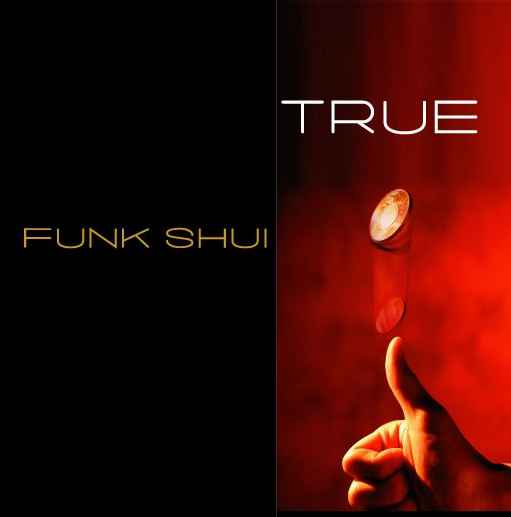
I wrote the songs. I teamed up with an extraordinarily talented keyboard player named Dave Powers. We recorded an album.
The gigging part didn't go quite as planned. We played precisely one gig before Dave decided jazz was more interesting than whatever musical concoction I was pursuing.
There is probably another Notem in that story.
But in October 1991, Dave and I did something that seemed considerably more consequential.
We went to New York City for the CMJ Music Marathon.
The Dream
For an aspiring musician in 1991, CMJ felt like a doorway into another world.
Record executives, producers, lawyers, musicians, songwriters and assorted industry people descended on New York for several days. For someone sitting in Columbus wondering how one actually entered the music business, this was intoxicating.
Maybe you would meet someone.
Maybe somebody would hear your music.
Maybe this was how it happened.
I arrived carrying many of the same dreams as everyone else.
I left thinking very differently.
Two people were responsible.
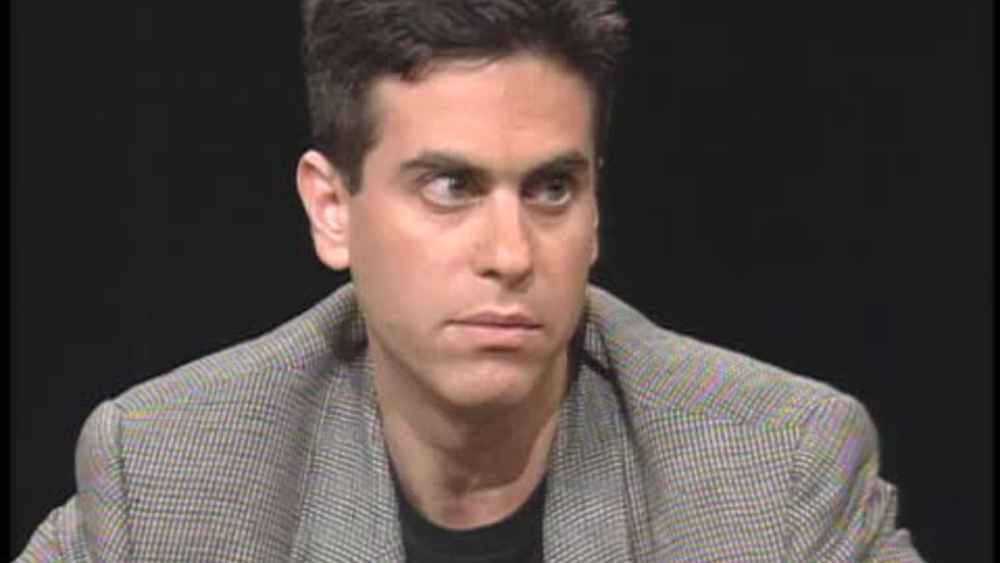
Fredric Dannen
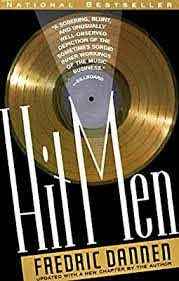
Fredric Dannen had recently written Hit Men, his investigation into the inner workings of the American record business. I happened to be reading the book during the trip, and Dannen was also one of the speakers at CMJ.
I remember very little of his presentation today.
But I remember the message:
Don't hang your hat on this industry.
Afterward, there was an informal gathering where attendees could speak with him. Someone challenged Dannen's portrayal of the record business, arguing that perhaps things weren't really as bad as he had described.
Dannen didn't launch into a lengthy defense.
As I remember it, he essentially shrugged and said:
You can believe what you want to believe.
That stayed with me.
Between his book and that brief encounter, something became clear. I was looking at the music industry as the institution that would somehow grant me permission to have a career in music.
Dannen was telling us that perhaps this wasn't an institution upon which anyone should build his life.
Then I met someone who showed me the alternative.
A Nearly Empty Room
CMJ offered discussions on seemingly every corner of the music business. One afternoon I wandered into a songwriter forum, largely because nothing else at that particular time interested me.
It was held in a long room with a group of songwriters sitting at tables at one end and folding chairs arranged for the audience.
Almost nobody showed up.
There may actually have been more panelists than audience members.
Because of the sparse attendance, the formal presentation gave way to something much more intimate. The songwriters answered questions and then, one by one, performed something they had written.
Most of it has disappeared completely from my memory.
Then the last songwriter performed.
He wasn't particularly imposing. He spoke softly. He seemed almost shy.
And then he played a song.
It was called “All the Best.”
I remember sitting there thinking that this unassuming man had somehow managed to capture the pain of an entire failed relationship in a simple song.
There was no spectacle.
No elaborate production.
No attempt to impress anyone.
Just a man, a song and a few chords.
I had a lump in my throat and was concentrating rather hard on not tearing up in front of a room full of strangers.
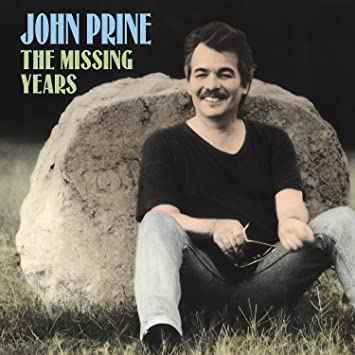
His name was John Prine.
I had absolutely no idea who he was.
Half an Hour With John Prine
Afterward, I wanted to talk to him.
What puzzled me was how someone who wrote music like that survived in the same industry Fredric Dannen had just described.
We stood outside the room and talked for what I remember being close to half an hour.
I wish I could remember every word.
I can't.
But I remember what the conversation did to me.
Prine talked about his career, the music business and earning a living. He described writing and recording his music and finding ways to get it to people.
What struck me was how little interest he seemed to have in all the machinery I thought was necessary.
The image.
The connections.
The record-company executive who would discover you.
The carefully constructed career.
He just seemed interested in making music and finding people who wanted to hear it.
I remember being astonished when he talked about selling recordings through the mail. The idea that people would deliberately seek out someone's music and order it directly seemed almost revolutionary to me at the time.
Remember, this was 1991.
There was no YouTube.
No Spotify.
No social media.
No easy way for an independent artist to reach people around the world.
Yet here was this quiet songwriter who had built an audience largely by doing things on his own terms.
My interpretation of that conversation became very simple:
Follow your bliss—and don't wait for someone else to give you permission.
Then I Discovered Who He Was
Several months later, my girlfriend and I went to a concert featuring Leo Kottke.
I was there to see Kottke, one of the great acoustic guitarists.
The headliner was some guy named John Prine.
Whatever.
Leo Kottke was terrific.
Then the intermission ended. The lights went down and the headliner walked toward center stage.
As he came into view, something began registering in my brain.
Wait a minute.
That's the guy I talked to in New York.
The place was packed.
Thousands of people had apparently come to see the quiet songwriter from that nearly empty room at CMJ.
I couldn't believe it.
The man I'd spent half an hour talking with wasn't some struggling songwriter trying to break into the business.
He was John Prine.
And somehow, that made our conversation even more meaningful.
He hadn't spoken to me as someone important talking to someone who wasn't.
He had simply talked to me.
One Man Warned Me About the System. Another Showed Me I Didn't Need It.
Looking back more than three decades later, I can see something I couldn't possibly have understood at the time.
Fredric Dannen and John Prine delivered two halves of the same lesson.
Dannen showed me the danger of building your future around an institution whose interests may have very little to do with yours.
Prine showed me another possibility.
Make something worthwhile.
Find the people who appreciate it.
Keep going.
Don't spend your life waiting to be selected.
I didn't become a professional musician.
Instead, I eventually earned a master's degree in electrical engineering, built a software company, taught technology, continued writing and recording music, and pursued a collection of interests that probably would have seemed rather disconnected to that young chemical analyst in Columbus.
Today they don't seem disconnected at all.
There is a common thread running through much of what I've done:
Build something. Put it into the world. Find the people who value it. Don't wait for permission.
I'm not sure I can attribute all of that to one afternoon in New York City.
But I'm equally sure that afternoon changed me.
John Prine died in 2020. Around the time I met him, I was writing a song of my own called “Soft Falling Rain.”
When I listen to it now, I hear some of what attracted me to “All the Best” all those years ago: the desire to say something emotionally complicated without making the music complicated.
I'd like to think John would have understood what I was trying to do.
And I'm still grateful that, for half an hour in 1991, he took the time to talk to a young musician who didn't even know who he was.